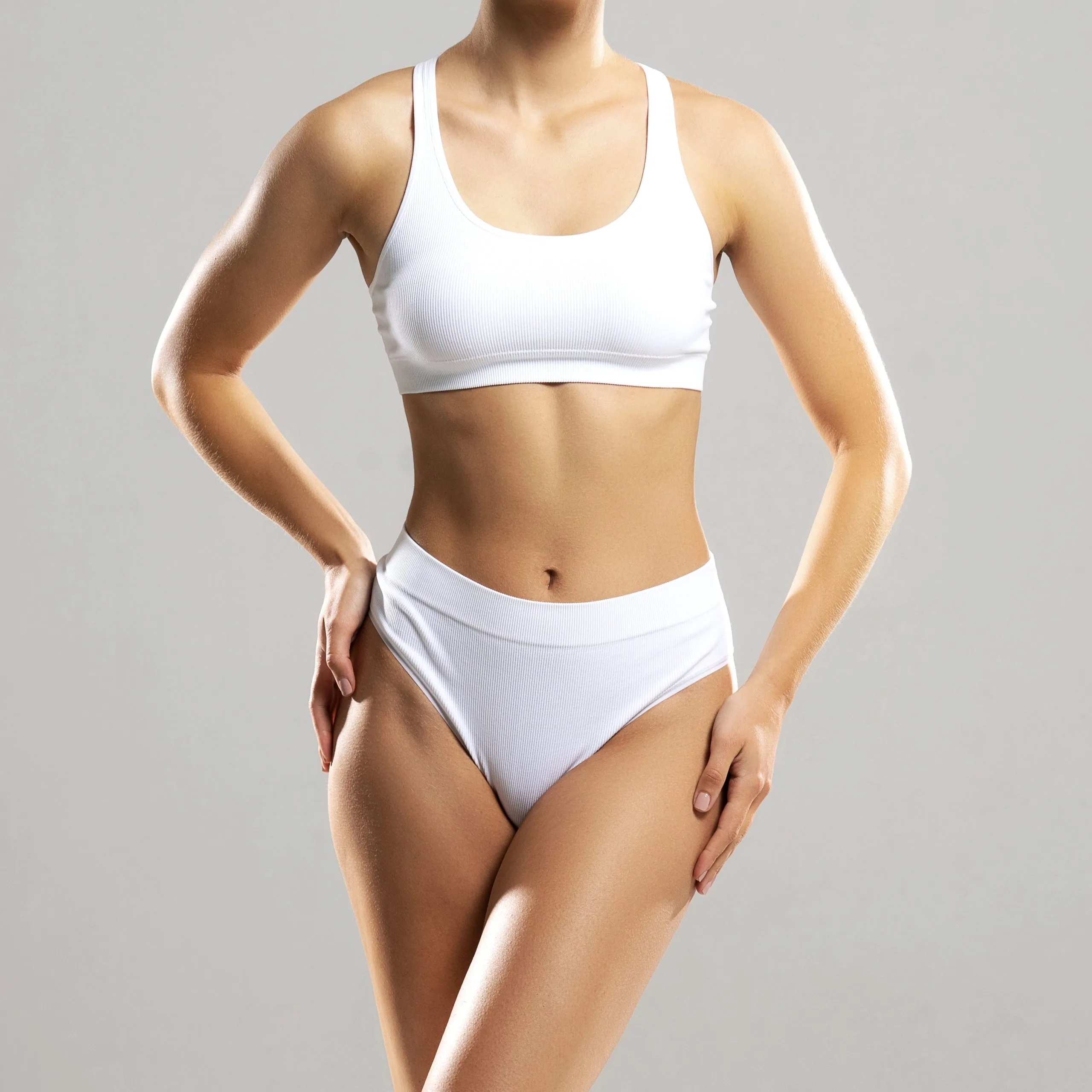
After a tummy tuck, your belly button will typically look natural, round or vertically oval, and sit in a proportionate position on your newly contoured abdomen. While it may appear swollen or slightly different in the weeks following surgery, the final result is usually visible around 6-12 months post-op. The belly button will blend seamlessly with your flatter midsection.
Your original navel retains its connection to the underlying muscle throughout the procedure, but Dr. Harold Bafitis carefully crafts its external appearance to create a natural-looking result that complements your overall body contour.
A tummy tuck, or abdominoplasty, is designed to address loose skin and separated muscles in the midsection, often after pregnancy or significant weight loss. To achieve a flat stomach, a significant amount of excess skin must be removed from the area between the navel and the pubic bone.
Because the belly button (umbilicus) is a fixed point attached by a “stalk” to the deeper abdominal wall, the surrounding skin must be maneuvered around it. Without careful attention, the navel could end up too high, too low, or hidden entirely. Dr. Bafitis creates a new opening in the repositioned skin so the belly button can be brought through and placed in the correct anatomical location.
During a full tummy tuck, Dr. Bafitis makes a careful incision around the perimeter of your belly button, freeing it from the surrounding abdominal skin. However, it remains attached to the muscle wall underneath throughout the entire procedure.
Once the abdominal skin is lifted, the underlying muscles are repaired if needed. The skin is then pulled down smoothly over the abdomen, and the excess is trimmed away. Finally, a new opening is created in this tightened skin, and your original belly button is brought through and sutured into its new, ideal position. This step is critical because the final position and shape of the navel determine how natural the abdomen looks overall.
The reshaping of the belly button, or umbilicoplasty, is where surgical artistry becomes crucial. The goal is to create a small, slightly recessed navel – typically with a subtle vertical or hooded shape – that looks like a natural belly button rather than a surgical result.
Dr. Bafitis tailors the belly button’s appearance based on each patient’s anatomy, skin thickness, and body proportions. Factors that influence the final look include:
How the incision around the navel is made
The tension of the surrounding skin
The suturing method used to control size, depth, and contour
Incisions are carefully placed to hide the resulting scar within the natural shadows and folds of the newly created belly button, making it as inconspicuous as possible.
No, your belly button will not look exactly the same, and that’s by design. Many patients seeking a tummy tuck already have a belly button that has become wide, stretched, or “sad” (horizontal) due to skin laxity from pregnancy or weight changes. The procedure is an opportunity to restore it to a more aesthetically pleasing shape.
The new belly button is designed to appear youthful, well-positioned, and proportionate to the contoured abdomen. While it is your original belly button, its final look is a new and improved version that doesn’t draw attention to the fact that surgery was performed.
In the early weeks after surgery, you can expect several temporary changes:
New Shape: Your navel will likely be smaller and more vertically oriented
New Position: It will be centered on your newly flattened abdomen
Swelling: Swelling around the navel may make it look larger or puffier than the final result
Mild Discoloration: Bruising in the surrounding skin is common
A Slightly Raised Appearance: The tissue needs time to heal and settle
Tightness: The skin adjusts to its new position over time
Scarring: There will be a scar, but it is typically well-hidden within the new contours of the belly button itself
These changes are a normal part of healing. Over the course of several months, swelling resolves and the belly button gradually settles into its permanent shape and position.
Whether the belly button is repositioned depends on the type of tummy tuck performed.
Full Tummy Tuck: This procedure addresses loose skin both above and below the navel. In nearly all full tummy tucks, the belly button must be released and repositioned because the skin above and around it is being significantly re-draped.
Mini Tummy Tuck: For patients with loose skin confined only to the area below the belly button, a mini tummy tuck may be an option. The belly button is typically not moved, or it may be slightly pulled downward (a “float”) without a new incision around it.
During your consultation, Dr. Bafitis will evaluate your anatomy and determine which approach will provide the desired outcome.
Patience is key when it comes to belly button healing after a tummy tuck. The navel is one of the last areas to reach its final appearance because it sits in a zone of significant skin tension and swelling. Most patients see noticeable improvement by three months, with the final shape becoming clear around the 6-12-month mark.
Following Dr. Bafitis’ post-operative instructions supports proper healing:
Wearing compression garments as directed
Keeping the area clean
Attending all follow-up appointments
Using SPF and barrier creams to protect delicate scar tissue as it matures
While most healing progresses smoothly, you should contact our office if you notice:
Persistent or increasing redness or warmth
Unusual discharge from the navel area
Fever
Significant asymmetry after swelling has resolved
These concerns can often be addressed during routine follow-up visits.
A tummy tuck can do more than create a flatter abdomen – it can also restore a natural-looking, aesthetically pleasing belly button that complements your new contours. While the healing process takes time, an experienced surgeon can carefully reshape and position the navel to achieve a natural result. If you’re considering a tummy tuck and have questions about how your belly button may look after surgery, scheduling a consultation is the best way to understand what to expect based on your unique anatomy and goals.
About the Author
Dr. Bafitis, Double Board-Certified Facial Plastic Surgeon
June 6, 2026

About Us
Face
Facelift
Body Surgery
Medspa